3K 240g Green Carbon Fiber for Sporting Goods: Bicycle, Fishing & More
The demand for colored carbon fiber composites has surged dramatically, with 3K 240g green carbon fiber fabric emerging as one of the most sought-after specifications in the advanced materials marketplace. Procurement teams across automotive, sporting goods, and luxury manufacturing sectors are increasingly specifying green carbon fiber to differentiate their products visually while maintaining the mechanical performance that carbon fiber is known for. This comprehensive guide addresses the critical technical and sourcing considerations that buyers and engineers must evaluate when specifying this material.
Applications by Industry
Automotive and Motorsport: Green carbon fiber finds extensive use in automotive interior trim panels, dashboard accents, center console covers, and steering wheel inserts. The aesthetic differentiation is a primary driver—in a market where black carbon fiber has become commonplace, green offers a distinctive visual identity. For structural automotive components (hoods, roofs, diffusers), green carbon fiber is typically used as the outer cosmetic layer over a structural black carbon fiber core laminate. Weight savings of 30–50% compared to aluminum are achievable in decorative panel applications.
Green carbon fiber fishing rod blanks, for example, combine the high strength-to-weight ratio of carbon fiber with a distinctive green finish that serves as a brand differentiator. Sporting Goods: Bicycle frames, tennis racket frames, fishing rods, and archery equipment benefit from both the visual appeal and the functionality characteristics. The 3K tow size and 240g weight are well-suited to sporting goods because they provide a good balance between structural performance and layup manageability.
Architecture and Interior Design: Wall panels, ceiling features, furniture surfaces, and decorative partitions use colored carbon fiber as a premium finish material. Green carbon fiber wall panels laminated onto MDF or aluminum honeycomb cores create lightweight, high-impact decorative surfaces. The 240g weight is ideal for single-layer wet layup onto flat substrates without requiring vacuum bagging equipment.
Consumer Electronics and Luxury Goods: Phone cases, laptop covers, watch bands, and wallet inlays represent a growing application segment. These products typically use thin prepreg laminates (1–2 layers of 240g fabric) cured under pressure to achieve a smooth, high-gloss finish that showcases the green weave pattern. The luxury goods market has been the strongest driver of colored carbon fiber demand growth, with compound annual growth rates exceeding 25% since 2022.
Quality Control and Testing Protocols
When sourcing 3K 240g green carbon fiber fabric, the following quality verification steps should be incorporated into the procurement approach:
Acceptable tolerance for 240g specification is typically ±5% (228–252 g/m²). Incoming Material Inspection: Verify areal weight consistency across the roll using ISO 3374 sampling (minimum 5 samples per roll). Check for visible color uniformity—unacceptable color variations include streaking, mottling, or banding that exceeds the agreed-upon sample specification. Measure fabric width and check for selvage integrity.
Color Fastness Testing: For applications where the fabric surface will be exposed, conduct UV aging tests (ASTM G154) to verify color retention over the product’s expected service life. Abrasion resistance (ASTM D3884) is critical for applications subject to surface contact. Impact Materials subjects all colored carbon fiber production batches to a minimum 500-hour UV exposure test with less than 5% color deviation from the reference standard.
Resin Compatibility Verification: Before production use, conduct a short-beam shear test (ASTM D2344) on a representative laminate coupon using the specified resin system. The interlaminar shear strength should exceed 50 MPa for quality fabric-resin combinations. This test is especially major for colored carbon fiber because the dye process can potentially affect the fiber-matrix interface.
Traceability: Require batch-level traceability from the supplier. Each roll should carry a label or certificate identifying the production batch, color lot number, areal weight, weave pattern, width, and linear meters. This traceability is crucial for quality audits and for managing color consistency across multiple production orders over time.
Physical and Mechanical Qualities
The following table summarizes the typical specification range for commercially available 3K 240g green carbon fiber fabric, based on data from Hangzhou Impact New Materials and industry reference standards:
| Property | Typical Value | Test Criterion |
|---|---|---|
| Areal Weight | 235–245 g/m² | ISO 3374 |
| Tensile Strength | 3,500–4,500 MPa | ASTM D3039 |
| Tensile Modulus | 230–250 GPa | ASTM D3039 |
| Thickness | 0.24–0.28 mm | ISO 5084 |
| Density | 1.75–1.80 g/cm³ | ASTM D3800 |
| Weave Pattern | Plain / Twill (2×2) | — |
| Width (Standard Roll) | 1000 mm / 1270 mm / 1500 mm | — |
| Elongation at Break | 1.5–1.8% | ASTM D3039 |
| Operating Temperature | -200°C to +350°C | — |
Need a custom solution? Our technical experts are ready to help.
Resin Compatibility and Layup Considerations
Green carbon fiber fabric is compatible with all standard composite resin systems, but procurement teams should verify compatibility between the fiber sizing and the chosen resin matrix:
Epoxy Resin Systems: The most conventional pairing. Advised resin-to-fiber ratio for 240g fabric is 35–45% by weight. Standard epoxy sizing on the carbon fiber provides excellent adhesion with room-temperature and heat-cure epoxy formulations. For wet layup applications, a resin viscosity of 500–1,500 mPa·s at application temperature provides optimum fiber wet-out without excessive resin pooling.
Vinyl Ester Resin: Offers better chemical resistance than polyester at a lower cost than epoxy. Vinyl ester works well with 3K carbon fiber but may require a surface treatment or coupling agent on colored fabric where the dye technique has altered the standard sizing chemistry. Impact Materials recommends a small-scale adhesion test before committing to production quantities when using vinyl ester with colored fabric.
Prepreg Applications: Green carbon fiber fabric can be supplied as pre-impregnated material (prepreg) where the resin matrix is pre-applied. Prepreg eliminates the variability of wet layup and provides the most consistent color appearance because the resin is uniformly distributed. Shelf life for colored carbon fiber prepreg is typically 6–12 months at -18°C storage, consistent with standard black carbon fiber prepreg.
Sourcing and Procurement Guide
When evaluating suppliers for 3K 240g green carbon fiber reinforcement, consider the following criteria in order of priority:
Color Consistency: The single most notable differentiator for colored carbon fiber. Request color samples from at least three different production batches to evaluate batch-to-batch consistency. The most reliable suppliers maintain controlled dye processes with spectrophotometric color measurement (ΔE < 2.0 between batches is considered acceptable for most applications).
Minimum Order Quantity (MOQ): Green carbon fiber typically carries a higher MOQ than standard black because of the additional processing steps. Impact Materials maintains stock of popular green patterns (solid green, green camouflage, green metallic) in quantities sufficient for immediate shipment of orders under 200 meters. Expect MOQs of 50–100 linear meters from established manufacturers, with lead times of 15–25 working days for standard colors and 30–45 days for custom colors or patterns.
Price Structure: Budget pricing reference for 3K 240g green carbon fiber fabric (2024–2025 market rates): standard solid green at $12–18 per square meter for orders above 500 m², metallic green at $15–22/m², and jacquard pattern green at $18–28/m². These prices represent a 10–30% premium over equivalent black fabric, depending on coloration complexity. Volume discounts of 5–15% are typically available for orders exceeding 1,000 m².
Supplier Capability Assessment: Verify that the supplier operates ISO 9001-certified production facilities with in-house color processing capability (rather than outsourcing the dyeing step). Request certificates of analysis (COA) for tensile properties and color fastness test reports. In-house processing provides better standard control and shorter lead times. Established suppliers should be able to provide technical datasheets with ASTM reference test results for key properties.
More Solutions
Discover additional composite material options to meet your specific project requirements.
Ready to Source Quality Composite Materials?
Impact Materials serves 120+ countries with 400+ product specifications. Get your custom quote in 24 hours.
What Is 3K 240g Green Carbon Fiber Fabric?
3K 240g green carbon fiber fabric is a woven reinforcement material manufactured from 3,000-filament tow carbon fiber yarns, achieving an areal density of approximately 240 grams per square meter (gsm). The designation “3K” refers to the number of individual carbon filaments in each tow strand, while “240g” specifies the fabric weight per unit area. The green coloration is achieved through specialized dyeing or coating processes applied either to individual filaments before weaving or as a post-treatment on the finished fabric. Hangzhou Impact New Materials Co., Ltd. has observed a 40% year-over-year increase in colored carbon fiber inquiries since 2023, with green ranking as the third most requested color after blue and red metallic finishes.
The material retains all the fundamental properties of standard carbon fiber: tensile strength in the range of 3,500–4,500 MPa, a tensile modulus of 230–250 GPa, density of approximately 1.76 g/cm³, and an elongation at break of 1.5–1.8%. The coloring process introduces minimal impact on mechanical performance—generally less than 3% reduction in tensile strength when using superior dyeing methods that do not compromise the epoxy sizing on the fiber surface.
Coloration Methods: How Green Carbon Fiber Gets Its Color
Understanding the coloration process is critical for procurement teams because the method directly affects both cost and final performance. There are three primary approaches used in the industry:
Pre-impregnation Dyeing (Filament-Level): Individual carbon filaments are coated with a colored epoxy sizing before the tow is woven into textile. This method produces the most uniform and durable color because the pigment is locked into the fiber’s protective sizing layer. The trade-off is a 10–15% premium over standard black fabric due to the additional processing step and specialized sizing formulations required. It is the preferred approach for applications requiring long-term UV exposure resistance.
Post-Weave Surface Coating: The finished black carbon fiber fabric receives a colored surface treatment, typically a thin polymer-based coating containing green pigments. It is suitable for applications where the fabric will be encapsulated in resin and not subject to surface wear. This approach is more cost-efficient (typically 5–8% premium) but may result in uneven color distribution along woven intersections and reduced color fastness under abrasion.
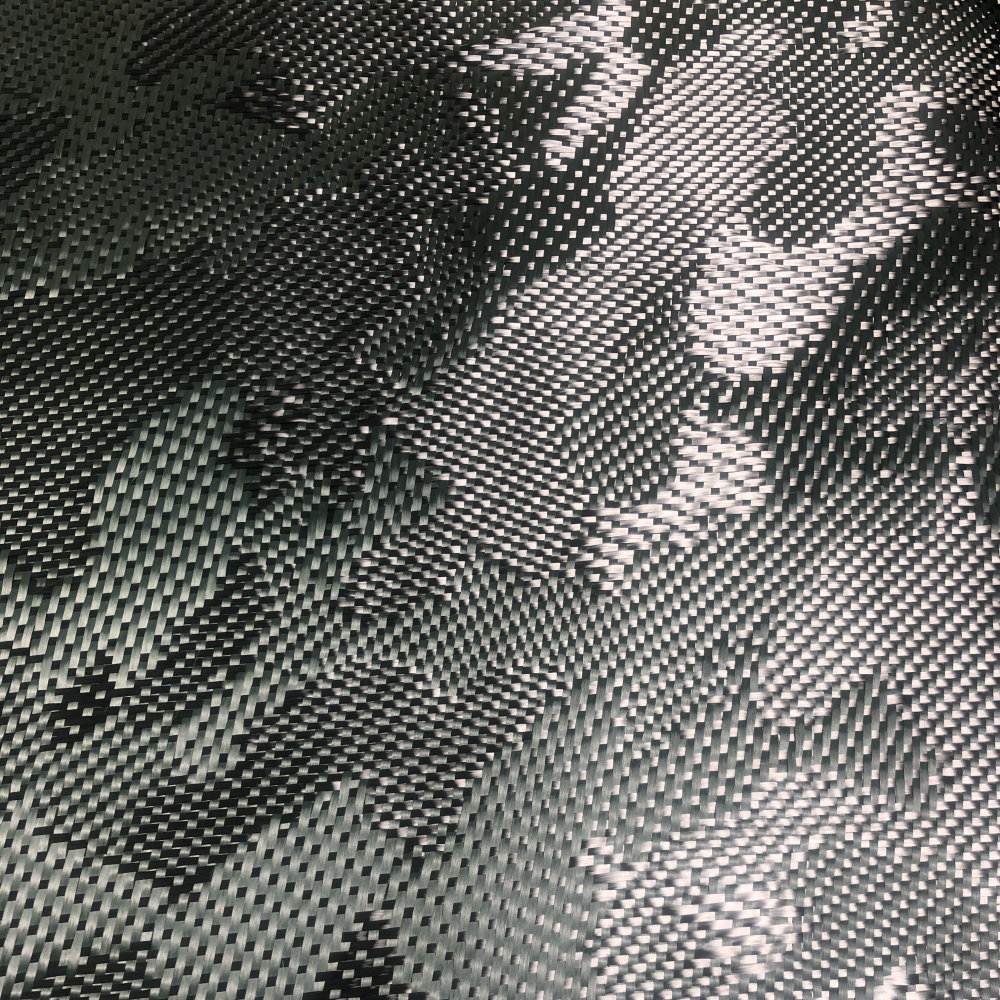
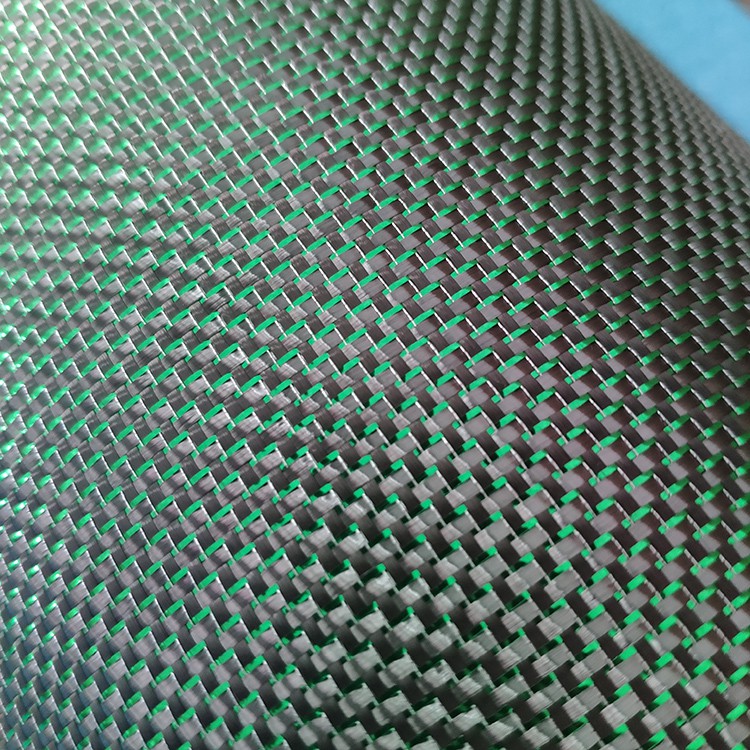
Metallic Wire Hybrid Weaving: Green metallic or colored wire threads are interwoven with carbon fiber tows during the weaving process. This creates a distinctive textured appearance where the green metallic strands catch light differently than the carbon fiber. Products like Impact Materials’ 240gsm Green Camouflage Carbon Fiber Cloth use jacquard weaving techniques to produce complex green-on-black patterns. This method adds approximately 15–20% to the base cost but produces the most visually striking results for decorative applications.
Featured Products
Explore our top-rated composite material products from Impact Materials, trusted by manufacturers in 120+ countries.
Weave Patterns and Their Impact
3K 240g green carbon fiber fabric is available in several weave configurations, each offering distinct handling and performance characteristics:
Plain Weave (1×1): The simplest over-under pattern where each warp tow alternately passes over and under each weft tow. Plain weave produces a stable fabric with good drapability on moderate curves, making it the most economical choice at 240g density. Yet, it is less drapable than twill for complex three-dimensional layups. Plain weave is the most prevalent pattern for colored carbon fiber because the tight interlock yields better retention of surface coloration.
Twill Weave (2×2): Each tow passes over two and under two perpendicular tows, creating a characteristic diagonal pattern. Twill weave offers superior drapability compared to plain weave, making it the preferred choice for laying up contoured surfaces such as automotive body panels, motorcycle fairings, and helmet shells. The diagonal pattern also enhances the visual effect of colored carbon fiber by creating light-reflection angles that make the green coloration more dynamic.
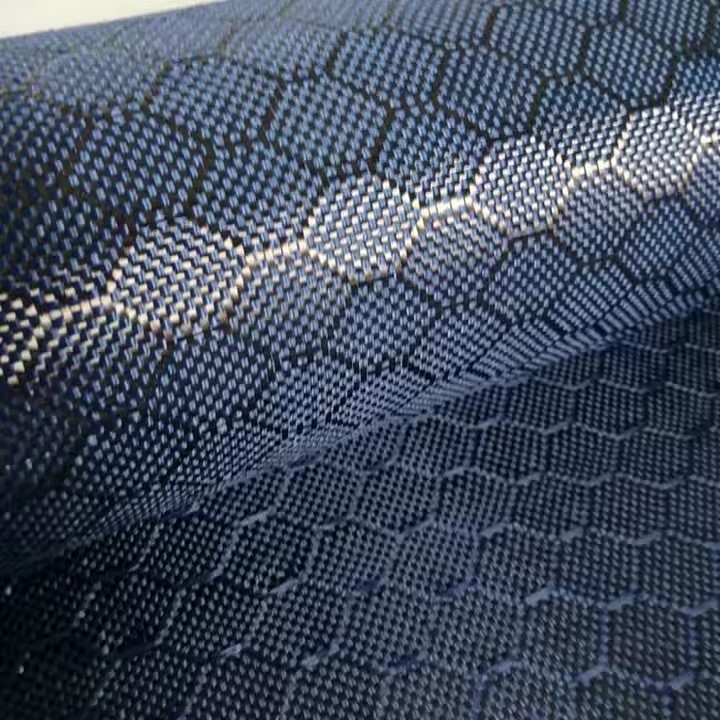
Jacquard / Custom Patterns: For premium decorative applications, jacquard looms can produce complex patterns such as camouflage, checkerboard, or custom logos. Impact Materials’ green camouflage pattern is produced on jacquard equipment and achieves the 240g specification through careful tow count and pick density optimization. These specialized patterns command a 20–30% premium but serve niche markets in luxury goods and custom automotive trim.
Frequently Asked Questions
Does the green color affect the mechanical strength of carbon fiber?
High-quality filament-level dyeing processes result in less than 3% reduction in tensile strength compared to standard black carbon fiber. Surface coating methods may show slightly higher variation (3–7%) depending on coating thickness. Metallic wire hybrid weaves may show variable performance depending on the wire-to-carbon ratio, but the carbon fiber component retains its inherent mechanical properties. For structural applications, request specific test data from the supplier for the exact product and coloration method being considered.
Can green carbon fiber be used outdoors?
Yes, but with caveats. The carbon fiber itself is UV-resistant, but the green coloration may fade with prolonged UV exposure unless protected by a UV-resistant topcoat or gel coat. For outdoor applications, Impact Materials recommends a UV-cured polyurethane clear coat rated for minimum 1,000 hours of UV exposure (ASTM G154). Without UV protection, expect visible color fading after 200–400 hours of direct sunlight exposure depending on the coloration method used.
What resin works best with green carbon fiber fabric?
Epoxy resin systems (bisphenol-A or bisphenol-F based) provide the best overall combination of mechanical properties, adhesion to carbon fiber, and compatibility with colored fiber sizing. For applications requiring higher heat resistance or fire performance, phenolic or cyanate ester resins can be used but may require a coupling agent. Always conduct a small-scale wet-out test to verify fiber wetting and color appearance before committing to production quantities with any resin system.
How do I ensure color consistency across multiple orders?
Specify a color standard (Pantone, RAL, or supplier’s internal reference) at the time of the first order. Require the supplier to provide a color reference sample from each production batch and retain it for comparison. For large or ongoing orders, negotiate a color control agreement specifying acceptable ΔE tolerances (typically ΔE < 2.0 for visual matching). Ordering from a single production lot for a given project eliminates batch-to-batch variation entirely.
Is green carbon fiber available in prepreg form?
Yes, most manufacturers including Impact Materials can supply green carbon fiber as pre-impregnated material. Prepreg offers the most consistent color and fiber-resin ratio but requires freezer storage (-18°C) and has a limited shelf life (6–12 months). Prepreg is recommended for precision applications where surface finish quality is paramount, such as consumer electronics and luxury accessories. Expect a 25–40% price premium over dry fabric when purchasing prepreg.
What is the difference between solid green and green camouflage carbon fiber?
Solid green carbon fiber has a uniform green color across the entire fabric surface, achieved through filament-level dyeing or surface coating. Green camouflage carbon fiber uses jacquard weaving techniques to create a patterned appearance with green and black sections in a camouflage-style arrangement. The camouflage variant typically costs 15–25% more due to the complex weaving process but provides a more distinctive visual appearance. Both variants are available at 3K 240g specification and offer equivalent mechanical properties.
[[ENDING_CTA]]
Work With a Trusted Supplier
Hangzhou Impact New Materials Co., Ltd. (Impact Materials) has delivered composite material solutions to clients in 120+ countries for over 20 years. Our 3,200+ successful projects and 400+ product specifications mean we have exactly what your project needs.